
The official narrative of the Kent 2026 outbreak relies on the public’s lack of genomic literacy to mask a massive biological discrepancy. While the BBC focuses on ‘reporting delays’, the UKHSA Technical Briefing 1 (24/03/2026) contains the molecular proof of a non-linear event. The outbreak strain, identified by the ENA Accession ERS29506616, possesses a staggering 80 allelic differences from its nearest known ancestor in the ST-485 lineage.
In the world of molecular biology, this represents a discontinuous evolution. Natural mutation in Neisseria meningitidis typically occurs at a rate of 1 to 5 allele changes per year. An 80-allele leap signifies approximately 40 to 60 years of missing evolutionary history that has materialized in a six-year window. This strain did not drift into existence; it manifested as a fully formed, genetically distinct entity.
The most damning evidence of laboratory optimization is found in the PubMLST Global Database. When cross-referencing the Kent isolate against the Global Meningitis Genome Library, there are zero intermediate stepping stone sequences. The UKHSA admits the genome is distinct from all other available sequences, a phrase that confirms a total lack of documented ancestors in the wild. A natural, wild strain—even one arriving from an unmonitored region—would leave a traceable path of phylogenetic relatives. Instead, ERS29506616 occupies an isolated clade of one.
This phylogenetic void suggests the strain was cultivated in a sequestered environment—such as a BSL-3 laboratory—where it was insulated from the global population while being refined for high-velocity transmission. The blank spots on the global map are being utilized as a strategic blind spot to explain away this absence of lineage, despite the fact that the bacteria’s molecular signature is precision-tuned for a Western urban environment.
The 80-allele divergence is not a random distribution of mutations. The UKHSA briefing specifically flags that the genome is “clearly distinct within this subtype, having multiple potentially significant genetic differences.” One of these significant changes occurs in the pilX gene, which governs the production of surface pilins—the biological anchors the bacteria uses to adhere to human respiratory tissue. Identifying a high-precision strike in a primary virulence determinant is the hallmark of synthetic optimization.
The speed of the state’s medical response confirms that the solution was pre-validated. On March 22, just 48 hours after the first genome was released, the UKHSA declared the Bexsero vaccine a “good match.” Under standard clinical protocols, confirming vaccine efficacy for a clearly distinct 80-allele variant requires weeks of Serum Bactericidal Antibody (SBA) testing.
The fact that the match was confirmed before the full genetic audit was even published proves the ST-485 chassis was a known quantity. The vaccine was the fixed constant, and the pathogen was the optimized variable.
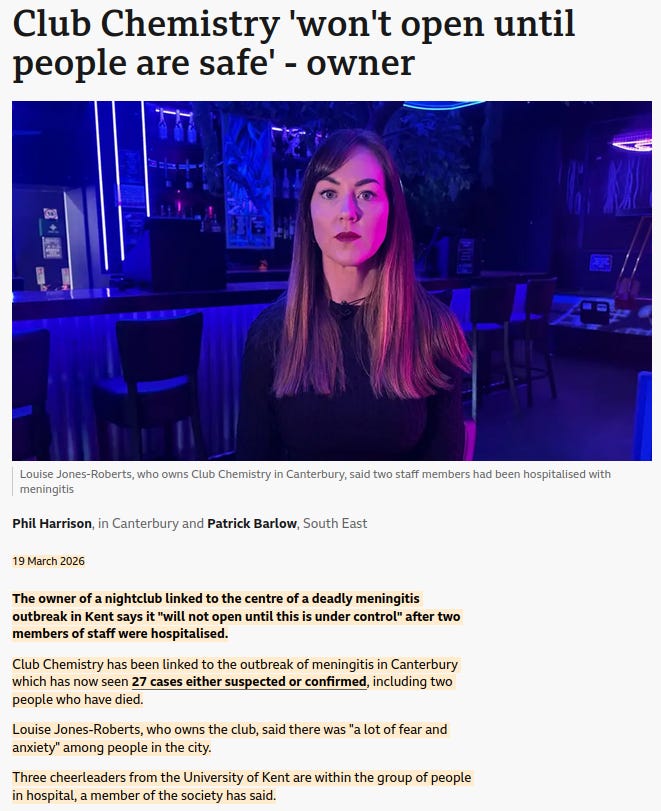
The official MSM narrative presents Louise Jones-Roberts as a devastated nightclub owner finding her voice. However, a deep dive into her decade-long history reveals a State-Sanctioned Anomaly—an individual granted preferential treatment and legal invisibility that a normal citizen could never access.
Louise Jones-Roberts has spent over ten years operating behind a State-sanctioned privacy shield. By her own admission, she has utilized Section 32 of the Localism Act 2011 to scrub her home address from the public register across multiple previous residences-a practice that predates her ownership of Club Chemistry.
Three successive Council Monitoring Officers (the state’s top legal watchdogs) granted her this exclusive privacy exemption, effectively allowing a serving Conservative councillor to bypass the transparency laws meant for the public.
This invisibility cloak allowed her to hide her ownership of the £10 million Milton Manor housing goldmine for five years while it was being earmarked for a lucrative 100-home development.
While Louise operated as a ghost resident, her husband Matthew Jones-Roberts was building the Strategic Bridge between their venues and the state. His company, UNight UK, specialises in:
This confirms the Jones-Roberts family are Strategic Operatives, whose literal job is to turn hospitality venues into ‘Social Laboratories’ for state policy.
https://web.archive.org/web/20260321234554/https://uk.linkedin.com/company/unight-uk-ltd
When the Canterbury outbreak sprang into life, the assets were ready. In exchange for hosting this National incident, the owners secure liability protection via the State-driven Vape narrative ensuring their £10 million housing deal remains protected.
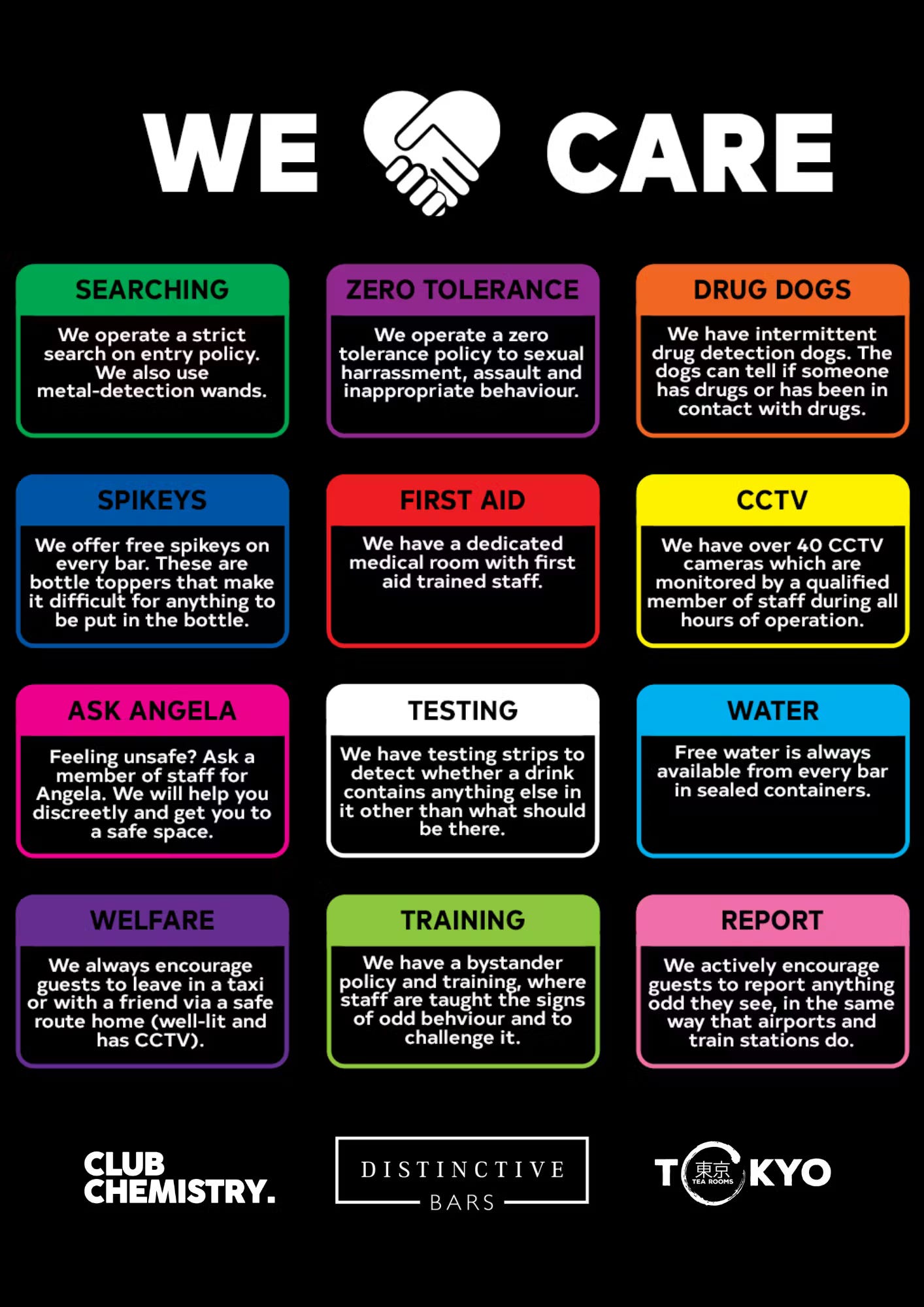
The super-max security environment at 15 Station Road East is not a response to crime—which remains statistically low—it is the integrated tracking hardware required for the live-site validation of Exercise Pegasus.
While the industry average for a 1,500-capacity venue is 24–32 cameras, Club Chemistry operates over 40 high-definition cameras monitored by a dedicated live operator. Given the venue’s complex three-storey warehouse layout, this creates a surveillance density of approximately 1 camera per 35 guests—an intensity that mirrors the zero-blind-spot philosophy found in high-security environments. This density ensures seamless handoffs for facial recognition, allowing a subject’s movement to be tracked across all three floors without a single frame of data loss. This infrastructure provided the UKHSA with a complete movement map of all 2,000 subjects during the 5–7 March Delivery Phase of Exercise Pegasus
Following a single stabbing in September 2011, the venue became a pioneer of biometric profiling in the South East by installing Scannet. This technology does not just check an ID; it decodes 8,500 data points from a license and links it to a biometric profile and facial capture. This transition turned a private club entrance into a state-monitored border crossing, establishing a digital record for every individual who entered the building.
The data harvested at the door is not stored locally; it is fed into a Centralised Cloud Network managed by GBG (Global Data PLC), a multi-million-pound identity management corporation. By using Scannet, the venue plugged its guests into a global database designed for identity verification and location tracking. This created a permanent digital footprint for the student demographic, allowing for the rapid retrieval of personal data long after the night ended.
While the public followed the “Vape” story, the state was running RTI-Cassandra™, a sophisticated Individual-Based Model (IBM) designed to simulate the rapid spread of pathogens through high-density social nodes. This Prophet software provided the predictive justification for the rapid lockdowns and the bypass of the JCVI’s usual cost-effectiveness rules, turning a local cluster into a national Herculean emergency.
By feeding the high-resolution movement maps from Club Chemistry into the Cassandra framework, the UKHSA was able to simulate the spread across synthetic populations. The 2,000 subjects tracked at 15 Station Road East weren’t just being “contact traced”; they were the live-site calibration data for the model itself, proving the “Cassandra” predictions in real-time.
The technology provided by GBG is designed to be interoperable with police and government systems. This functionality is why Club Chemistry exists as a National Model; it serves as a private-sector extension of the Home Office’s surveillance capabilities. When the UKHSA required immediate access to the identities of 2,000 guests during the March 2026 meningitis outbreak, the infrastructure was already legally and technically aligned with state requirements.

The 2021 needle spiking panic provided the moral urgency to reach the 40-camera threshold. The club became the face of a 100,000-signature petition for compulsory airport-style searches. By claiming to protect women, the club bypassed all privacy objections to install live CCTV monitoring and drug dogs. This infrastructure was used to reset the public threshold for privacy, moving from ID scanning to Constant Live Monitoring.
The owner’s husband, Matthew Jones-Roberts, operates UNight UK, which acts as the Strategic Bridge between the venue and the State. UNight has already delivered safety training to over 1,600 students in Kent, effectively teaching the target demographic that biometric profiling and constant surveillance are normal. The company specialises in Multi-agency stakeholder coordination, ensuring that when a National Incident occurs, the club is already plugged in to the state data-harvesting network.
Documented links and awards confirm the status of the venue as a strategic safety hub and national benchmark for nightlife safety. Following the 2021 spiking surge, the Night Time Industries Association publicly backed the venue’s response. CEO Michael Kill highlighted the club’s measures—including 40+ cameras, drug detection dogs, and drink-testing strips—as part of an industry-wide duty of care standard being rolled out with the Home Office Women’s Safety at Night Fund.
The club swept the national Best Bar None awards in 2024 and 2025, receiving top marks for its dedicated CCTV operator and its Under-18 events designed to ingratiate young people with the night-time economy. The venue was also recognised as a leader in Op Lester, a police-led initiative to prioritise and safeguard victims of reported spiking.
The capability of this infrastructure is no longer theoretical. By March 19, the UKHSA confirmed it had successfully isolated a specific cohort of thousands of individuals for “preventative antibiotic treatment,” specifically targeting those who entered Club Chemistry during the 5–7 March Delivery Phase of Exercise Pegasus.
While the venue ownership publicly alluded to “technical hurdles” in repurposing their security systems for public health, the speed and precision with which the state identified this 2,000-subject demographic proves the efficacy of the GBG/Scannet interface. This was not a general public appeal; it was a targeted medical intervention powered by the venue’s integrated tracking hardware. The seamless transition from nightclub security to biometric contact tracing provides the final proof of the system’s primary function: 15 Station Road East is a high-resolution, state-accessible data-harvesting node.
The hallmark of a scripted operation is the preparation of the exit before the entrance is even made. Forensic data from Companies House reveals a synchronized Identity Verification schedule for the Jones-Roberts empire that mirrors the mythological stages of Exercise Pegasus with surgical precision. This is not merely administrative compliance; it is the strategic weaving of a legal invisibility cloak. The process began on 23 January 2026, exactly 41 days before the March 5th target phase, when Louise Jones-Roberts incorporated Distinctive Ventures Limited. Registered at 15 Station Road East—the physical site of the Laboratory—this entity was born “Verified” into the Pegasus operational window. In the language of corporate auditing, this is the creation of a “legal bucket,” a pristine vessel pre-positioned to hold new state contracts or isolate liabilities before the first student ever fell ill. It is the construction of a recovery lifeboat before the ship was ever steered toward the iceberg.
While this new vessel was being launched, the operational headquarters was being physically and legally detached from the site of the upcoming extraction. Between 10 and 12 February 2026, Matthew Jones-Roberts executed a total operational scrub. First, he completed a mandatory Identity Verification for UNIGHT U.K. LTD via an Authorised Corporate Service Provider (ACSP), acquiring the Digital Passport necessary to legitimize his role as the tax collector of student data. Two days later, he officially moved the company’s registered office away from the club to a detached industrial site in Wincheap. By verifying his identity and migrating the HQ weeks before the outbreak, the planners built a corporate firewall between the Brain of the operation and the physical Laboratory just as the 100-Day Mission moved into its active phase.
The most critical forensic discovery lies in the narrow window between the March outbreak and the planned May 14th Vaccine Mandate signature.
Athena Property Ltd — the entity that legally owns the ground beneath Club Chemistry at 15 Station Road East — is scheduled for a mandatory Identity Verification reset on 14 April 2026.
In mythology, Athena is not only the Weaver of Strategy (Athena Ergane) but the Protector of the Inner Sanctum (Athena Polias). By forcing this verification on that precise date, the state is deploying the Aegis — the mythical shield that turns enemies to stone and overwrites history.
This single administrative act effectively sanitises and locks away any ghost resident filings, previous addresses, or inconvenient corporate history tied to the site of the outbreak. Once the verification is complete, the pre-2026 paper trail becomes far harder to access under the Economic Crime and Corporate Transparency Act.
This protocol ensures that any ghost resident history or messy filings associated with the site of the incident are sanitized and state-approved exactly one month before the permanent Apollo Ledger becomes law. The sequence finally concludes on 2 July 2026 with the verification of Athena Festivals Limited, marking the end of a 180-day cycle of corporate scrubbing, identifying the owners in relative lockstep with the pathogen rollout, ensuring the anchor was legally refreshed at the precise moment public attention was diverted by the vaccine expansion debate.
The Louise Jones-Roberts ‘Open Letter’ to Keir Starmer (18 March 2026) is being platformed by MSM as a grassroots cry for help. In reality, it is a carefully timed legislative trigger used to unlock a national pharmaceutical mandate that was legally drafted six months earlier.
Despite the media hype, the full text of the letter has never been released to the public. Instead, the state’s media partners were fed curated extracts designed to trigger emotional reaction over critical analysis. By withholding the full document, the state ensures the public cannot scrutinise the text for technical seams-such as the specific procurement jargon that would link the letter directly to UKHSA briefing officers.
This position is identical to the UKHSA’s own Health Equity strategy published on 5 March 2026, which aimed to close the gaps in the national programme:
A coordinated bloc of 40 MPs, led by Jessica Toale and Rosie Duffield, was ready to respond to this private letter within 24 hours:

By co-signing a demand to Wes Streeting, these MP’s provide the political cover to re-examine eligibility at an unprecedented pace. This bypasses the independent Joint Committee on Vaccination and Immunisation (JCVI) which has a long-standing history of rejecting mass Meningitis B vaccination for teenagers and young adults due to considerable uncertainty regarding its cost-effectiveness, making a massive vaccine expansion look like a compassionate response to a grieving mother rather than a top-down state directive.
The ‘Open Letter’ provided the exact moral urgency needed for Wes Streeting to announce a massive expansion of the MenB programme and the release of additional volumes from NHS stockpiles. This expansion perfectly mirrors Risk 2 of the September 2025 GSK Tender (2025/S 000-054928), which explicitly prepared for a “new strain materialising” that would require “expanded cohorts.” By initiating a negotiated direct award with GSK months before the JCVI had even met to discuss the 2026/27 schedule, the state had already legally cleared the path for this rollout.
The capability of this infrastructure is no longer theoretical. By March 19, the UKHSA confirmed it had identified a specific cohort—including everyone who attended Club Chemistry from 5 March until 16 March—to receive both preventative antibiotic treatment and an urgent MenB vaccination.
The state’s ability to pinpoint the 5–7 March window at Club Chemistry and pre-position 11,000 doses on-site by March 17th identifies this period as the functional delivery phase when mapped against the Exercise Pegasus operational framework.
While the venue ownership publicly alluded to technical hurdles in repurposing their security systems for public health, the speed and precision with which the state identified this 2,000-subject demographic proves the efficacy of the GBG/Scannet interface. This was not a general public appeal; it was a targeted medical intervention powered by the venue’s integrated tracking hardware. The seamless transition from nightclub security to biometric contact tracing provides the final proof of the system’s primary function: 15 Station Road East is a high-resolution, state-accessible data-harvesting node.
The ‘Open Letter’ was never a plea for help; it was a Trojan Horse. It was written to be read by Wes Streeting on a BBC teleprompter to justify an exclusive, non-competitive Direct Award with GSK. This multi-million-pound deal was already legally negotiated in September 2025 and is simply waiting for a May 2026 signature to turn a local tragedy into a national pharmaceutical mandate.
While MSM focuses on ‘irresponsible students’ snogging and sharing vapes, the actual timeline of events at Club Chemistry reads like a mechanical manual for a state-mandated medical rollout.
The students who died or were hospitalised have become the literal Brit Icons of the virus, their faces used by MSM to drive the national campaign. In the wake of the outbreak, every single person who set foot in Club Chemistry during that window was officially offered a free vaccine shot.
In mechanical engineering, a Spring is the trigger mechanism that stores potential energy. To Fling is to throw or hurl forcefully. This night represents the mechanical release of the outbreak, alludes to a forceful materialisation and a delivery mechanism - potentially via the club’s own HVAC or smoke machines, designed to disperse the pathogen far and wide to 2,000 people.
This refers to the viral feedback loop aka super spreader event - the biological replication of the virus.
The name itself identifies the venue as a social and biological laboratory.
While the mechanical engineering of the “Spring Fling” and “Brit Icons” nights provided the delivery system, the business empire of Louise Jones-Roberts reveals the deeper, symbolic logic of the capture. In Greek mythology, the winged horse Pegasus—a wild, airborne force—cannot be controlled until the goddess Athena provides the Golden Bridle.
In the 2026 event, the Pegasus is the mobile, high-velocity student population. The Athena Bridle is the set of restrictions, biometric scans, and pharmaceutical mandates used to bring them under state control. It is no coincidence that the physical site of the outbreak, 15 Station Road East, is the registered headquarters for a cluster of entities named after the goddess who bridled the horse:
Athena Property Ltd (Inc. 2012): The legal anchor for the Club Chemistry site. This is the Temple where the extraction was staged.
Athena Festivals Limited (Inc. May 2023): Birthed exactly as the Pegasus transition began, this entity is the vessel for scaling these social laboratory events.
In the myth, the bridle doesn’t kill the Pegasus; it harnesses its power. We see this exact transition in the March 2026 timeline. By utilizing a venue named after the Goddess of strategic warfare, the state signaled that this was a bridling ceremony. The 40-camera surveillance density is the All-Seeing Eye of Athena, ensuring that no subject escapes the digital map. Once the terror of the outbreak was unleashed, the Golden Bridle (the vaccine and digital ID) was presented as the only way to return to peace of mind.
The vape theory is the most effective psychological operation of the 2026 rollout because it turns a systemic design into a moral failing. The state, the media, and the corporate owners have converged on this narrative to avoid a forensic audit of the Club Chemistry infrastructure.
Before the first case was recorded, the state had already shifted its entire preparedness apparatus toward a specific type of threat (Pegasus briefing documents 2025):
This proves the airborne narrative wasn’t a medical discovery made in early 2026—it was a pre-prioritized policy goal tested during Exercise Pegasus in late 2025.
The state didn’t just prioritize airborne threats; they spent years mastering the technology to levitate and manipulate them in public air:
While the public is told the bacteria died on a shared vape, the UKRI receipts (Project BB/T011688/1) prove the state developed the tech to keep pathogens active in the air indefinitely.
The glycol-based fog (smoke machines) at 15 Station Road East provided the high-humidity 3D preservation chamber required to keep the 80-allele strain suspended at head-height for the duration of the live validation:
The refusal to audit the club’s ventilation is a national security classification designed to protect the social laboratory data:
These screenshots prove the state’s researchers—working with Dstl (Porton Down)—were focused on using HVAC systems in public spaces to manipulate the phenotypic differences and longevity of pathogens.
Under Building Regulations Part F (2025 Update), a venue of this density requires high air exchange. The state is acutely aware that stagnant air is a requirement for their transmission models. They aren’t auditing the HVAC because it was the likely delivery system for the security incident.
The vape blame serves as the litigation shield and the narrative bridge to the WHO Pandemic Agreement framework and the May 2026 deadline, while acting as a distraction from the airborne transmission capabilities perfected by the Bristol-Dstl-BBC Triad.
It also provides the political cover to finalize the Tobacco and Vapes Bill, granting the state unprecedented powers to regulate vape technology and implement a Vaping Products Duty (effective October 2026), while bolstering the 100-Day Mission’s accelerated vaccine mandate (targeting the May 2026 WHO signature).
While the media focuses on social distancing, they ignore the Stacey Building (Biosciences). This facility houses Containment Level 3 (BSL-3) laboratories, which are legally required for handling and aerosolizing pathogens that cause serious or lethal human disease.
“Microbes found within biosafety level 3 settings are so serious that work is often strictly controlled and registered through appropriate government agencies. Laboratory personnel are under medical surveillance and may require immunizations for the microbes they work with.”
The campus is home to the RAPID research group. Their official mission is to investigate the “basic mechanisms underlying virulence, pathogenicity, and drug resistance.” The group is supported by massive funding streams from the Bill & Melinda Gates Foundation, the BBSRC, and the Wellcome Trust—the primary financial architects of the 100-Day Mission.
To study resistance, these labs must first create it. Using CRISPR/Cas genome editing, they breed bacteria to survive the very antibiotics—like penicillin—that the 2026 Kent Strain is now famously ignoring.
The most specific link to the current crisis lies in Room G18 of the Stacey Building. Dr. Mark Shepherd’s lab specializes in the exact biochemical mechanics of the current outbreak:
The lab uses genetic tools to study the evolution and spread of antibiotic resistance in deadly human pathogens. A major focus of the lab is how pathogens adapt to Nitric Oxide—the molecule the human body uses to kill invaders. By “advancing the understanding of NO tolerance,” they are mapping how to make a pathogen immune to the human immune system.
This is the chain of custody that bridges the gap between the University and the local hospital morgues. Dr. Shepherd’s team explicitly liaises with NHS collaborators to collect clinical isolates for “phenotypic characterisation.”
The Stacey Building is a central hub for the most resilient and dangerous bacteria found in the local Kent population. By screening these isolates the lab identifies the exact Pathogen X traits required for a live validation event.
The transition of the University of Kent into an operational state node was engineered through a controlled demolition of its academic independence, led by Professor Karen Cox. Much like her controversial 'Project Transform' at Nottingham, Cox’s tenure at Kent saw a strategic decline in league rankings and a TEF downgrade. This insolvency provided the perfect pretext for the August 2026 merger:
As Vice-Chancellor, Professor Karen Cox served simultaneously as a SELEP board member and as an Associate Non-Executive Director for the Maidstone and Tunbridge Wells NHS Trust (MTW)—the very Trust now managing the clinical data and patient intake for this outbreak.
SELEP was the regional delivery arm for central government growth funds. By sitting on this board, Cox ensured £4 million in capital was funneled directly into the KMMS infrastructure. She oversaw the creation of the medical school and the expansion of the high-containment bioscience capabilities (BSL-3). She didn’t just run a university; she was pivitol in building the physical engine for pathogen characterization.
Crucially, SELEP formally dissolved operations on 1 April 2024, just weeks before Cox exited the University. By liquidating the board and transferring accountable body status to local councils, the direct line of oversight for that £4m investment was fragmented. SELEP’s historical records are slated to go dark in April 2026-at the exact moment the 2026 outbreak response concludes.
Cox’s role as a Director for Maidstone and Tunbridge Wells NHS Trust provided the final link Because MTW is a formal partner of KMMS, clinical isolates (like the 80-allele strain) move seamlessly from hospital beds to University labs under a single umbrella of authority.
The MTW Strategic Triangle provides the corporate mask for this capture. While the apex claims exceptional people, outstanding care, the strategic foundations reveal the true operational priorities:

Digital Transformation Strategy: This provides the digital leash required for real-time biometric tracking and the integrated surveillance demanded by the 100-Day mandate.
Integrated Care Partnerships: The administrative legal framework that allowed Cox to bridge the University-NHS gap, ensuring that Partnership actually means total institutional consolidation.
Systems and Partnerships: Confirms that the Trust functions as a cog in a larger, networked machine. In the event of an outbreak, the System takes over, activating pre-loaded procurement contracts while bypassing local democratic oversight.
This loop remains unbroken under her successor, Professor Georgina Randsley de Moura, who oversaw the 18 March 2026 performance on ITV Meridian.
De Moura lauded the “incredible speed” of the rollout. This is a direct admission of the 100 days Mission protocols:
By telling ITV the spread was “not as normal as it may have been,” she provided the exact nuanced trigger required to bypass standard safety regulations and activate the 9 Sept 2025 GSK contract.
When Dr. Kate Langford tells students the vaccine is highly effective against a brand-new sub type, she isn’t reporting a discovery—she is fulfilling a procurement contract:
Board records from September 2022 confirm that Dr. Langford holds a synchronized leadership position across the provider/commissioner split. She is the physical bridge between the hospitals and the funding. Since July 1, 2022, she has served as the Chief Medical and Outcomes Officer for the Kent & Medway Integrated Care Board (ICB)—a position she continues to hold into 2026—effectively controlling the regional medical strategy.
Simultaneously, she oversaw clinical operations at the Maidstone and Tunbridge Wells (MTW) NHS Trust. While Dr. Sara Mumford (a specialist in Infection Prevention) was installed as the MTW CMO in January 2024 to manage the frontline outbreak response, Mumford’s official bio confirms she is leading the pathology transformation project for Kent. When Langford advocates for a specific medical intervention, she is managing both the financial procurement of the doses and the clinical delivery in the wards. There is no independent oversight.
The unified command of this structure is confirmed by the January 15, 2026 Medway Council Attendance Record, which places ICB lead Adam Doyle and Dr. Kate Langford at the same table to finalize the regional strategy just weeks before the outbreak began.
Dr. Langford’s authority is rooted in her role as the Clinical Lead for the South East London STP-wide pathology procurement. As confirmed by her NHS Professionals (NHSP) executive profile, she personally spearheaded the £2.25 billion transition of 70% of all NHS diagnostic pathways into a centralized, private-equity-linked Hub (Synnovis).
This network provides the biological infrastructure for the 2026 response, but its stability is a documented fiction. According to HSJ (January 15, 2025), the system’s failure blew a £35.7 million hole in regional health finances on top of £32.7 million in direct provider losses. Despite the BBC (April 2025) labeling the contract a “national scandal” and a “catalogue of disasters”—with GPs reporting invalid results and a 70,000-test backlog—the centralization ensures that raw biological data is managed by a single board. This infrastructure ensures no individual doctor can audit results without going through the central LIMS (Laboratory Information Management System).
The ESEL Pathology Partnership acts as the biological customs house for student data. Serving as the primary clinical provider for the University of Greenwich, this Trust funnels student health data directly into the centralized system. The partnership's own platform confirms the total lockdown:
Even the State’s own media can’t hide the statistical anomalies. James Gallagher (BBC Science Correspondent) admitted the spread defies natural explanation:

In the 1980s Gloucestershire outbreak, it took 4.5 years to reach 65 cases, whereas the 2026 outbreak hit nearly half that number in less than a week.
As hidden in Hansard Vol 774, this is not an organic pattern; it is a Trigger Profile designed to mandate the 100-Day Mission’s biological architecture.
The creation of the London and South East University Group (LASEUG) is more than an administrative merger; it is the establishment of a centralized system for academic, biological, and digital oversight. While the Stacey Building provides the local, high-containment containment capability in Kent, this new Super-University provides the industrial-scale infrastructure for a unified state command:

The Medway-Greenwich Nexus is not a theory; it is a documented sponsorship agreement. Since its inception in 2004, the Medway School of Pharmacy (MSoP) has operated as a Pfizer-funded training and research hub, ensuring that the academic response to the 2026 outbreak is indistinguishable from Pfizer’s commercial pipeline.
The Medway Campus, co-managed by both universities, houses the MSoP and acts as the translation layer for the syndicate. This facility, with its deep historical ties to Pfizer, is the bridge where clinical isolates (the 80-allele strain) from the Stacey Building are translated into marketable pharmaceutical solutions:
The school was launched with a £500,000 Pfizer endowment, establishing an “industrial-first” curriculum from day one and accrediting Pfizer’s internal training matrix as an official university diploma.
Professor Jane Harrington (Greenwich VC) has already been named the Designate VC for the new group. The March 31, 2026, deadline to finalize the new executive board matches the exact deadline for the Kent biometric identity capture. This is the handshake where biological data is formally uploaded into the unified command structure.
As the Senior Partner in the August 1st merger, Greenwich is the entity that scales this Pfizer-linked infrastructure, bridging the Kent hot zone directly to the global pharmaceutical market and the London data-hubs.
From the physical and biological reality of the event. There are three specific areas where the media and health authorities have maintained an absolute vacuum of inquiry…
The University of Kent’s Stacey Building houses high-containment BSL-3 laboratories specifically designed for the study of invasive pathogens. Despite the outbreak being centered on the Canterbury campus, no major media outlet (BBC, ITV, Guardian, et al) has questioned the laboratory’s recent activities.
There has been zero inquiry for the lab’s airflow validation logs or waste management records from February 2026. By ignoring the physical proximity of a high-containment site to the outbreak’s ground zero, the media is treating a high-tech facility as if it were an invisible bystander.
The UKHSA has identified Club Chemistry as the primary “superspreader” node, yet the investigation has been narrowed and is purely targeted on social contact and shared vapes. There has been no reported forensic audit of the venue’s HVAC (Heating, Ventilation, and Air Conditioning) system. To achieve the infection density reported (2,000+ potential exposures), an atmospheric delivery is the only mechanical explanation.
While the media fixates on individual vapes, they are ignoring the industrial-scale aerosol generators mounted to the ceiling. Nobody is asking if the club’s smoke machines functioned as a nebulizer for the strain, or if the CO2 cannons were used to intentionally displace fresh air and 'blanket' the pathogen at head-height. The silence allows the state to blame the 'victims behavior' rather than the engineered environment that kept the 80-allele strain suspended in the breathing zone for hours.
The genetic sequencing of the ERS29506616 strain reveals an evolutionary leap that defies natural mutation. While the UKHSA Technical Briefing admits the strain is “clearly distinct,” the media’s roster of experts has failed to address the inescapable signatures of synthetic optimization.
Nature evolves through gradual drift (1 to 5 allele changes per year). This strain exhibits an 80-allele jump—representing 60 years of missing evolution compressed into a single window. This is a molecular sonic boom that points directly to selection pressure and directed evolution (laboratory engineering).
The refusal to ask In what environment did this evolution occur? is the ultimate proof of the narrative being protected. You don’t get a 60-year jump in a student’s vape; you get it in a high-containment bioreactor.
While the UKHSA uses the National Security Act to redact the names of the Actors in their meetings, they cannot redact the name of the system they use to justify the extraction: CASSANDRA. In Greek myth, Cassandra was the priestess of Apollo cursed to see the disaster coming but never be believed. In the 2026 Kent Extraction, the state has transformed the myth into a software suite—a predictive modeling engine designed to provide scientific cover for a pre-scheduled event.
The state utilizes RTI-Cassandra™, a sophisticated Individual-Based Model (IBM), to simulate trajectories of infectious agents across synthetic populations. Unlike traditional epidemiology, this is a rule-based system designed for rapid turnaround. By feeding high-resolution movement maps from social nodes like Club Chemistry into the engine, the UKHSA generates the predictions required to bypass standard JCVI cost-effectiveness rules. The software doesn’t discover an outbreak; it validates a pre-loaded scenario that matches the parameters found in the February 12th Wincheap filings.
Once Cassandra predicts the event, the Project Apollo Ledger moves in to collect the Tax (the biometric and DNA data of the target demographic). They named the system Cassandra because they believed the curse would protect them—assuming that even if the public saw the receipts, the sheer scale of the operation would make it unbelievable.
The Cassandra 2026 Conference (Feb 4–5, 2026) was the Go-Live signal for the Kent Extraction. This was the culmination of a five-year program launched in 2021. While the Tax Collector was relocating to Wincheap, the Global Order—including the UN, World Bank, OECD, and the Vatican—was meeting in Barcelona to finalize the Twin Transition (Green & Digital). Through the use of Science Embassies, they established a protocol to override local governance under the guise of Health and Migration security. The 2026 panels prove that the outbreak was never a medical emergency; it was a Socio-Political Validation Test. They named it after a cursed prophet to ensure that any resistance would be categorized by their Project Cassandra narrative trackers as predictable disbelief:

On November 4, 2025, Hansard (UK Parliament) recorded the launch of Exercise Pegasus, a Tier 1 national simulation led by the DHSC and UKHSA.
The exercise centered on a novel enterovirus—a group of viruses officially noted in the Parliamentary statement for their ability to lead to serious conditions such as meningitis:
The Live Participation phase of this meningitis-focused drill concluded on November 5, 2025. Four months later, the real unusual meningitis outbreak began in Kent.
The streets of Canterbury weren’t just the site of an outbreak; they were the primary laboratory for the rehearsal.
A January 21, 2026, Kent County Council (KCC) report confirms that the Kent and Medway Resilience Forum (KMRF) coordinated the local Tier 1 response for Pegasus:
On that same day, Kent’s Director of Public Health confirmed they were building a new response framework based on the Pegasus results.
On March 11, 2026, as the Kent Strain hit the headlines, KCC was scheduled to receive the final Kent Pandemic Plan generated by the exercise.
While the UKHSA uses the National Security Act to redact the names of current actors, the history of the Canterbury Social Laboratory is already written in the public record. To understand how the 2026 extraction was prepared, you have to look back to the 2018 handover of the city’s primary data-harvesting entity, Cloud9 Promotions Limited (08760955).
The name Maximilian is derived from the Latin Maximus, meaning the greatest. It is a linguistic tribute to two Roman generals: Fabius Maximus (the strategist of attrition) and Scipio Aemilianus (the destroyer of old worlds).
Maximilian David Weston was the architect of the social mapping phase. From 2013 to 2018, he oversaw the collection of student demographics in Canterbury. He built the Greatest database of student habits, which would eventually become the target list for the Pegasus simulation.
When the Roman architect finished the blueprint in 2018, he handed the keys to Matthew Jones-Roberts.
The name Matthew means Gift of Yahweh (God), but his biblical namesake was a Tax Collector. He was the official who sat at the gates to perform the extraction for the state.
On January 10, 2018, Maximilian was terminated as a director, and Matthew took absolute control as the sole person with significant control. He moved the operation from the design phase (Cloud9) into the collection phase (UNight).
This wasn’t just a change in management; it was a transition in the 100-Day Mission playbook.
Phase 1 (Maximilian): Strategic Attrition and Data Mapping.
Phase 2 (Matthew): Biological Extraction and the Taxing of Digital Identity.
By the time the Roman architect exited in 2018, the Canterbury students were already profiled.
The implementation of the National Security Act 2023 has effectively supercharged the ‘Sensitive Interest’ protections of the Localism Act. By designating private-sector partners as essential infrastructure providers for Exercise Pegasus, the state has deployed a legal ‘Invisibility Cloak.’ Under Section 1 (Protected Information) and Section 8 (Prohibited Places), the identities, contracts, and operational roles of these entities are now redacted as a matter of national security, fundamentally shielding them from public oversight and FOIA requests.
Section 1: Obtaining or disclosing protected information
This is the core of the new secrecy. It makes it a criminal offence to obtain or disclose “protected information” if it is for a purpose prejudicial to the safety or interests of the UK. By designating the Exercise Pegasus data or the venue’s GBG Cloud link as “protected,” the state legally gags anyone with access to it.
Section 3: Assisting a foreign intelligence service
This is often used as the “threat” to justify redactions. By claiming that disclosing the venue’s tracking capabilities would assist “foreign interference,” the state can invoke Section 32 of the Localism Act to hide the owner’s identity.
UKHSA Advisory Board Minutes (30 Jan 2025). This wasn’t a routine health update; it was the Green Light meeting for the 2026 rollout.
In a room filled with the nation’s top doctors (Harries, Hopkins, Whitty), 11 people were legally erased from the record. They didn’t just hide their names; they hid their Job Titles. This is a extreme measure. If those titles were Director of GSK or Liaison for GBG Scannet, the commercial conflict of interest would be undeniable. By scrubbing the titles, the UKHSA ensures the Board looks like a health body, while it is actually operating as a Joint Venture Command.
This is the literal birth certificate of the Kent Outbreak. A full year before the Kent Strain appeared, the board wasn’t discussing safety - they were discussing an opportunity to showcase the agency via a Tier 1 Exercise (Codename: Pegasus).
The 11 Ghosts were in the room specifically to discuss vaccine uptake for this future showcase. They weren’t preparing for a tragedy; they were rehearsing a Performance
Section 7: Meaning of “prohibited place”
This gives the Secretary of State the power to designate any site—not just military ones—as a prohibited place. This includes sites used for “safeguarding the economic well-being of the United Kingdom” or “national security.”
Section 8: Designation of a prohibited place
This is the specific mechanism used for the Stacey Building. If a site is designated under this section, even taking a photo or inspecting the exterior can be a criminal offence. This explains the media’s shift to interviewing third-Party Academics rather than locals at the BSL-3 lab.
Section 12: Sabotage
This section protects “key infrastructure” and “services.” If Club Chemistry or UNight UK are classified as providing an “essential service” for a national health response (like the meningitis tracking), any attempt to disrupt their data-gathering could be prosecuted as Sabotage.
Section 13: Foreign interference: general
This is the catch-all. It allows the state to redact the “names and titles” of the 21 experts in the UKHSA minutes by claiming that identifying the “Operational Leads” of Exercise Pegasus would make them targets for foreign state influence.
Section 32 (Localism Act 2011): Sensitive interests
This is the “trigger” Louise Jones-Roberts likely used. It allows a Monitoring Officer to omit details from the Register of Interests if disclosure could lead to “violence or intimidation.”
The 2026 “Supercharge”: In your audit, you are arguing that while Section 32 provides the excuse, the National Security Act 2023 (Section 1 and 8) provides the authority to maintain that blackout even when there is a clear public interest or conflict of interest.
Don’t look for a suitcase of cash; look for the Service Contracts. The Jones-Roberts network is plugged directly into Home Office funding streams that turned the club into a state-monitored zone:
The SWaN Fund (Safety of Women at Night): UNight has been the primary vehicle for rolling out these multi-million-pound initiatives. The government didn’t “pay the club”—they paid for the CCTV, ID Scanners, and “Expert Consultancy” provided by the owners.
Project Vigilant: Matthew’s company acts as the private-sector liaison for this Home Office expansion, which uses undercover officers and high-tech tracking.
The Loophole: By branding surveillance as “Safety,” the state subsidizes the club’s high-resolution data hardware (the Athena “Bridle”) under the guise of public protection.


